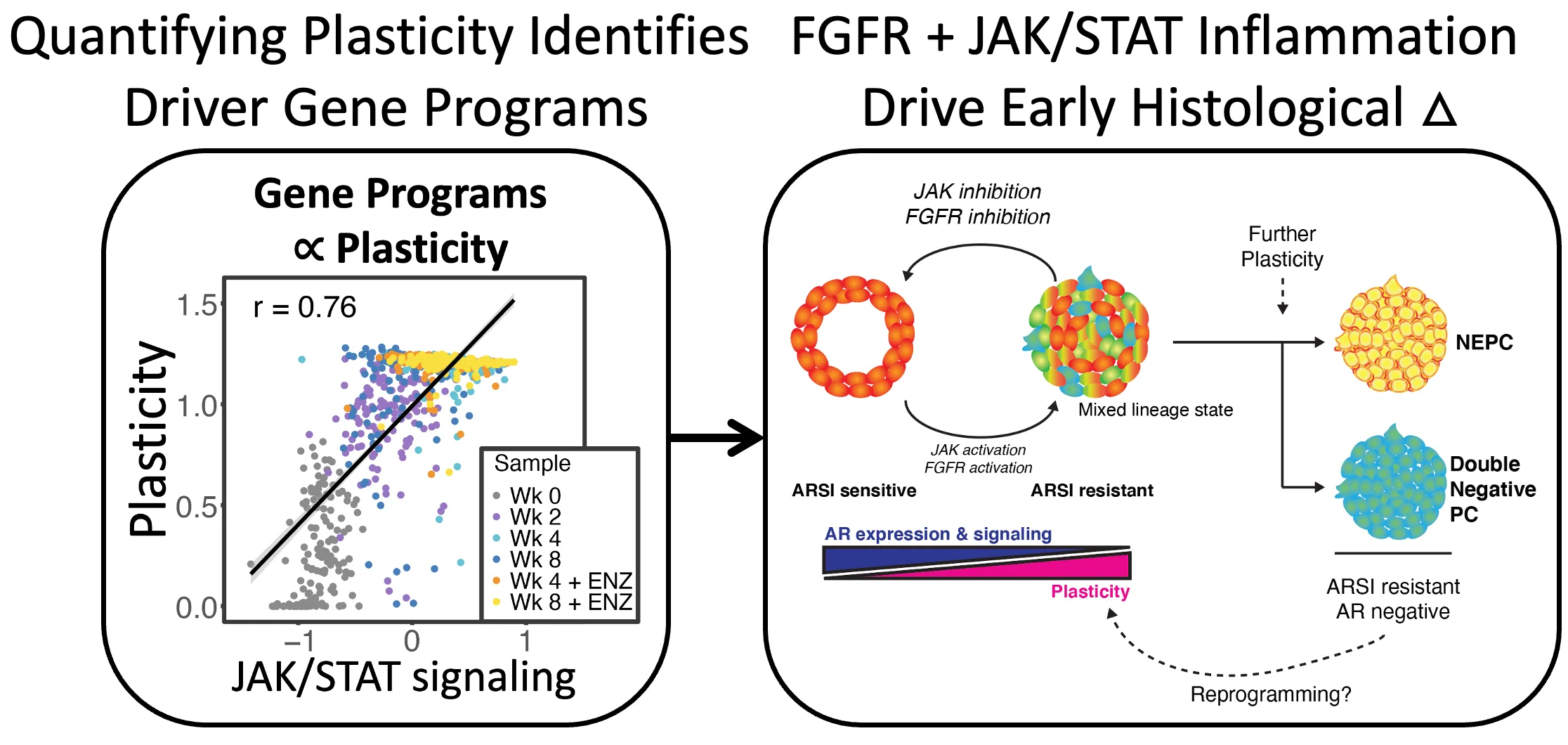
Lineage plasticity in prostate cancer depends on JAK/STAT inflammatory signaling.
Plasticity can be quantified at single-cell level to gain insight into underlying machinery. This strategy identified FGFR and JAK/STAT inflammation as a driver of plasticity in prostate cancer with combined FGFR and JAK inhibition reversing early stages of plasticity and restoring androgen sensitivity, but only prior to full neuroendocrine transformation.
Drug resistance in cancer is often linked to changes in tumor cell state or lineage, but the molecular mechanisms driving this plasticity remain unclear. Using murine organoid and genetically engineered mouse models, we investigated the causes of lineage plasticity in prostate cancer and its relationship to antiandrogen resistance. We found that plasticity initiates in an epithelial population defined by mixed luminal-basal phenotype and that it depends on increased Janus kinase (JAK) and fibroblast growth factor receptor (FGFR) activity. Organoid cultures from patients with castration-resistant disease harboring mixed-lineage cells reproduce the dependency observed in mice by up-regulating luminal gene expression upon JAK and FGFR inhibitor treatment. Single-cell analysis confirms the presence of mixed-lineage cells with increased JAK/STAT (signal transducer and activator of transcription) and FGFR signaling in a subset of patients with metastatic disease, with implications for stratifying patients for clinical trials.